
Digital Transformation
Making Digital Transformation Transformative for People with Learning Disabilities
People with learning disabilities are some of those whose human rights are most at risk through digital exclusion, digital poverty, and data poverty. But it doesn’t have to be that way!
In 2022 SCLD was given funding by the Scottish Government Digital Health and Care Directorate’s Technology Enabled Care (TEC) Programme, to consider how digital technology can transform the lives of people with learning disabilities.
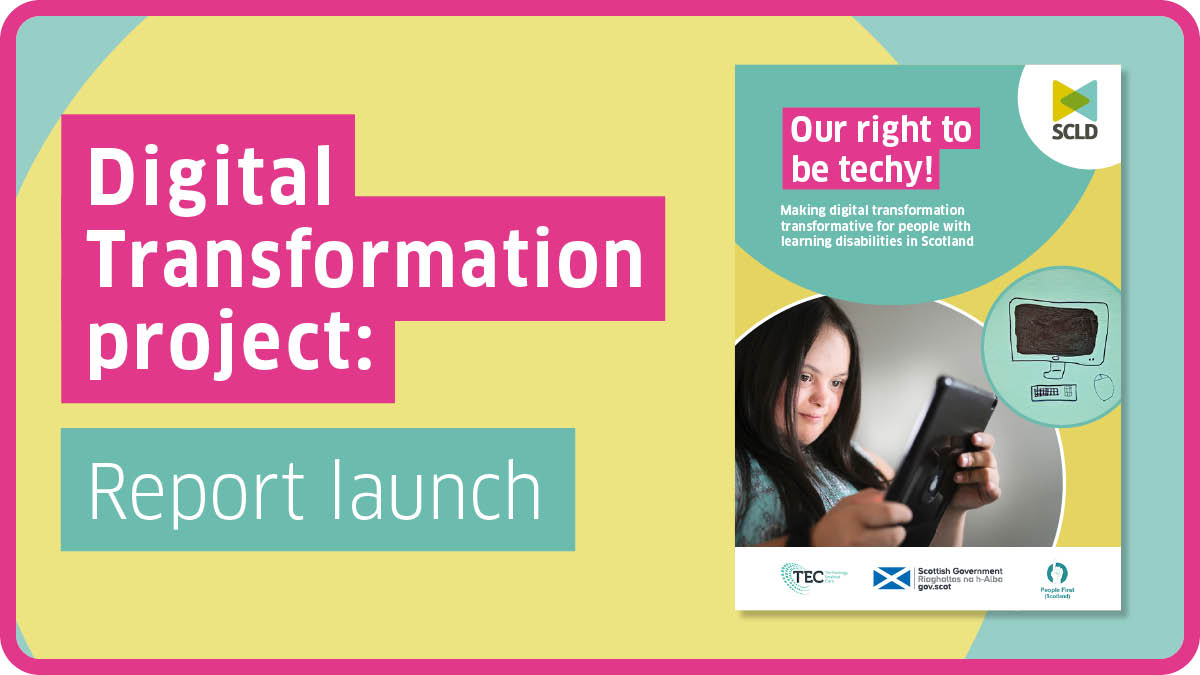
Over the past year the project has spoken to lots of people with learning disabilities about their experiences with digital technology, as well as looking at innovations in digital technology – both mainstream and specialist. Our project report is the culmination of this work and makes some recommendations for the short term, which we think can build the foundations for transformational change.
You can view our project reports and other outputs on the links below!
Our right to be techy! Full report
Our right to be techy! Easy read executive summary
Louis’s story, Digital Transformation, from SCLD on Vimeo.
Malek’s story, Digital Transformation, from SCLD on Vimeo.
Digital Navigator Board
Our Digital Transformation project has been steered by our Digital Navigator Board. The Board is made up of ten individuals with learning disabilities who live independently and advocate on their own behalf, and five individuals with learning disabilities whose participation in the project is enabled by the support and advocacy of a family carer or support worker. Board members were recruited on the basis that they had some experience using digital technology and were able to offer their experience to develop a set of research questions, promote the project in their networks and help to direct the overall aims of the project. A number of Board members were also took up the opportunity to be co-researchers for the project.
Hear what some of the Digital Navigator Board had to say about the project
- Sandy Stark, Digital Transformation from SCLD on Vimeo.
- Lindsay Kinloch, Digital Transformation from SCLD on Vimeo.
- John Clarke, Digital Transformation from SCLD on Vimeo.
Want to get in touch about the project?
If you want to chat to us about the project, or hear about what we are doing next please get in touch with our evidence programme lead Ruth Callander by email Ruth.C@scld.co.uk
You can find out how we protect the information you share with us as part of the project by reading our Privacy Notice here: Privacy Notice